სვეტიცხოვლის საკათედრო ტაძარი
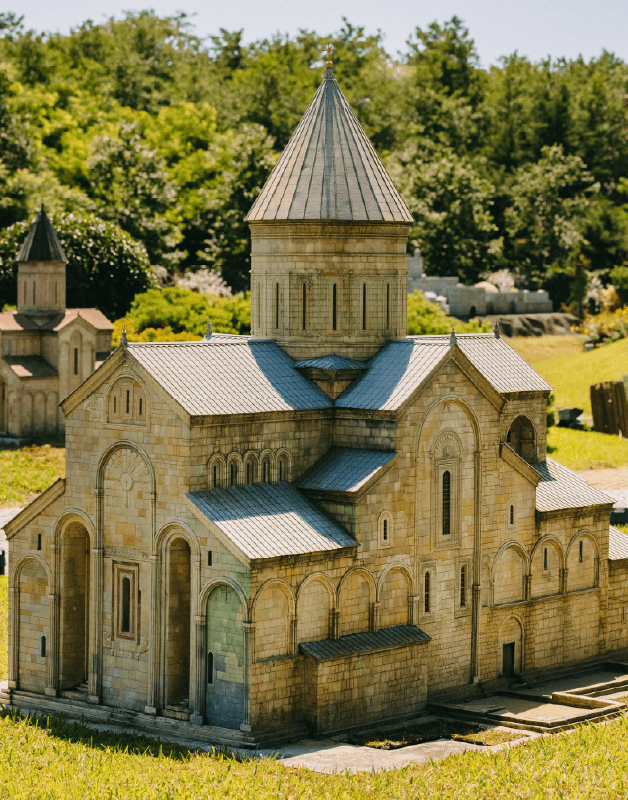
მცხეთაში მდებარე სვეტიცხოვლის საკათედრო ტაძარი საქართველოს მართლმადიდებელი ეკლესიის მთავარი საპატრიარქო საკათედრო ტაძარი, საქართველოს კათოლიკოს-პატრიარქთა აღსაყდრების ადგილი, შუა საუკუნეების საქართველოს მრავალი მეფის, მათი ოჯახის წევრებისა და პატრიარქთა განსასვენებელია. სვეტიცხოველი ააგო ქართველმა ხუროთმოძღვარმა, არსუკისძემ. აქ დაკრძალულია უფლის კვართი და წმ. ელია წინასწარმეტყველის მოსასხამი. ტაძარი იუნესკოს მსოფლიო კულტურული მემკვიდრეობის ძეგლთა სიაშია.
In the 4th century, King Mirian, who adopted Christianity, built the first church here on the advice of Saint Nino. In the 5th century, Vakhtang Gorgasali converted it into a basilica. In the 11th century, after the basilica was damaged, the Catholicos of Kartli, Melchizedek, built a new church and invited the architect Arsukisdze, whose name is inscribed on the building. Construction began in 1010 and was completed in 1029. Over time, Svetitskhoveli underwent several renovations.
Did you know that...
1. According to the medieval chronicles "Kartlis Tskhovreba" and "Moktsevay Kartlisay," Elioz of Mtskheta and Longinos of Karsi witnessed Christ’s crucifixion in Jerusalem and brought His robe back to Mtskheta. Elioz was met by his sister Sidonia, who embraced this precious relic and died from the overwhelming emotion. Sidonia was buried holding the robe, and later a cedar tree grew from her grave. After Christianity was adopted in the 4th century, King Mirian ordered the tree cut down to build a Christian church on Sidonia’s grave. During construction, one column could not be lifted until, by Saint Nino’s prayer, it miraculously rose, shone, and began to exude myrrh. Thus, the church was named "Svetitskhoveli," meaning "Living Pillar" in Georgian.
2. The name of the architect Arsukisdze is inscribed on the eastern façade of the church, below the central arch in medallions, and above the main northern window on two stones with a third stone between them carved with reliefs of a hand and a corner. The inscription reads: “Hand of the servant Arsukisdze. Forgive him.”
3. Arsukisdze reused parts of the old Svetitskhoveli to create an entirely new, independent building, demonstrating the grandeur of medieval Georgian architecture and the architect’s exceptional talent and skill.
4. The cathedral was damaged by an earthquake in 1283.
5. At the beginning of the 15th century, King Alexander I extensively restored the church.
6. On October 30, 1813, during Exarch Varlaam’s time, the gate of Svetitskhoveli was renewed, as confirmed by an epigraphic inscription.
7. On May 1, 1826, the bell tower in the cathedral’s courtyard collapsed, destroying a nearby house and resulting in the death of an 8-year-old child.
8. In the 1900s, a special meeting of Georgian architects and clergy decided that the cathedral should be roofed with cut stone.
9. The dome of Svetitskhoveli has 16 windows.
10. Svetitskhoveli is one of the foundational monuments of the advanced medieval Georgian architectural style.
11. In the 11th century, the cathedral was fully painted; fragments of this original artwork survive. The current murals date to the 16th, 17th, and possibly 18th centuries and were restored in the 19th century.
12. Archaeological evidence suggests that a burial site existed here before the first church was built. The identities of those buried here before the 4th century, except for Sidonia, who was buried with Christ’s robe, remain unknown.
13. The first recorded burial in Svetitskhoveli is associated with Vakhtang Gorgasali, who was officially interred in the first church.
14. In the cathedral courtyard, south of the wall, stands the palace of Catholicos Melchizedek, dating from the 11th century.
15. The cathedral is the subject of one of the greatest Georgian literary works — Konstantine Gamsakhurdia’s "The Right Hand of the Grand Master", considered a masterpiece of 20th-century Georgian literature, translated into many languages worldwide.
