ბაგრატის საკათედრო ტაძარი
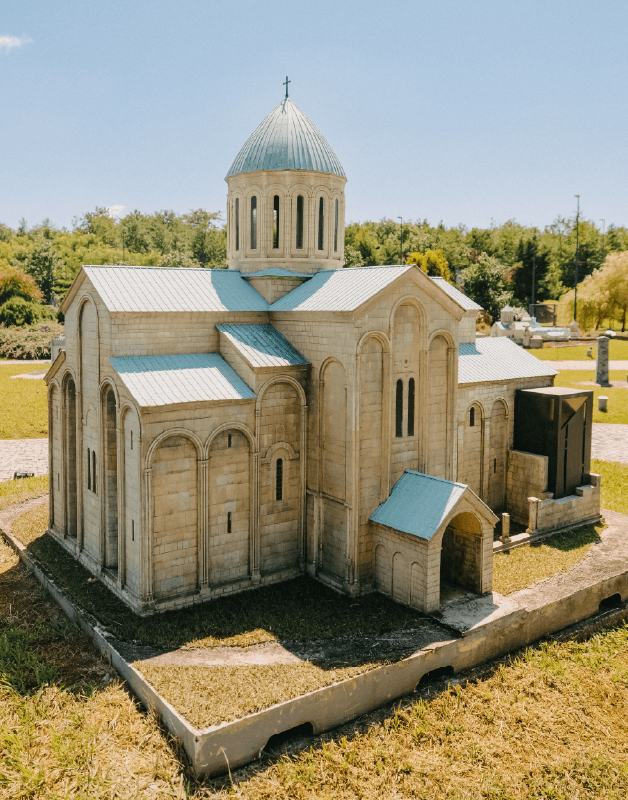
ბაგრატის საკათედრო ტაძარი, ანუ ღვთისმშობლის მიძინების სახელობის ტაძარი აგებულია 1003 წელს, ბაგრატ III-ის მეფობისას, ქუთაისში, უქიმერიონის გორაზე. ძეგლი წარმოადგენს ქართული შუა საუკუნეების საეკლესიო არქიტექტურაში საეტაპო მნიშვნელობის ტაძარს, როგორც თავისი არქიტექტურული გადაწყვეტით, ასევე — ისტორიული და სიმბოლური მნიშვნელობით.
Bagrat III, the first king of a unified feudal Georgia, united all Georgian territories (except Tbilisi) and commissioned the grand cathedral in Kutaisi – then the capital of Georgia (from 978 to 1122) - as a symbol of this unity. The name of the architect has not been preserved. Unfortunately, Bagrati Cathedral has suffered damage from numerous invasions throughout history.
Did you know that...
1. Shortly after its construction, a three-story residential tower was added to the northwest corner of the cathedral. Each floor had a room with a fireplace and niches. It is believed that this tower housed the bishop of Kutaisi. Construction work continued until 1008. In the 1020s, western and southern entrance halls (gates) were added.
2. According to an anonymous historian of King David the Builder, during the reign of King George II, Turkish forces invaded Georgia and burned the city of Kutaisi. Naturally, Bagrati Cathedral was damaged in the fire. The revival of Kutaisi, including likely restoration of the cathedral, occurred under King David the Builder.
3. In later centuries, Bagrati Cathedral retained its importance as the coronation site for Georgian monarchs. David, son of Queen Rusudan, was crowned King of Georgia and later of Western Georgia inside the Bagrati Cathedral.
4. In 1510, the Ottomans invaded Imereti. King Bagrat III of Imereti was unable to resist, and the invaders burnt Kutaisi, Gelati Monastery and Bagrati Cathedral.
5. The most devastating blow came in the 17th century, when the Ottomans placed gunpowder in all four corners of the cathedral and blew it up. The dome collapsed, the walls were weakened, and decorative elements and marble facing were removed and taken to the Ottoman Empire. In 1740, the ruins of the cathedral were converted into an armoury by the Ottomans.
6. In 1770, General Totleben of the Russian corps inflicted further damage. The Georgian King Solomon I was fighting to reclaim the Kutaisi fortress from the Ottomans. Totleben, who had come to assist but disregarded Solomon’s battle plan, placed cannons on the Mtsvane-Kvavila cape and fired upon the fortress. In the process, he further damaged the already weakened eastern wall of Bagrati Cathedral.
7. Around that time, likely beginning in 1770, King Solomon I converted the southern hall of the cathedral into a functioning church. Some of the frescoes visible today date to that period, as does the three-tiered bell tower that was constructed around the same time.
8. In the early 20th century, under the leadership of Bishop Gabriel of Imereti, a group formed in Kutaisi to protect the ruins of Bagrati Cathedral from complete destruction. They built a stone fence around the site to prevent locals from taking stones for their own construction projects.
9. Between 1911 and 1913, Bishop Gabriel resumed liturgical services in the ruins by converting the southern entrance into a small chapel.
10. In 1930, the Committee for the Protection of Monuments of Art and Antiquities allocated special funding to reinforce the remaining structure.
11. Petre Chabukiani was the first to clear the cathedral of earth and debris. In 1933, he discovered the buried bell tower doors and speculated that much of the cathedral remained underground. Excavations proved him right, and large parts of the cathedral became visible upon clearing.
12. In 1952, major reconstruction work began. Using reinforced concrete, cement mortar, and original stones, much of the cathedral's main structure was restored and stabilized. Although the new stonework is visually distinguishable, the same type of stone was used to harmonize with the overall structure. Since then, the cathedral has undergone several phases of restoration.
13. In early August 2009, archaeological excavations at Bagrati Cathedral revealed a lavish burial site believed to belong to a noblewoman. Scholars speculate it may be the tomb of the mother of King Leon II of Abkhazia, daughter of the Khazar khagan.
