Uplistsikhe
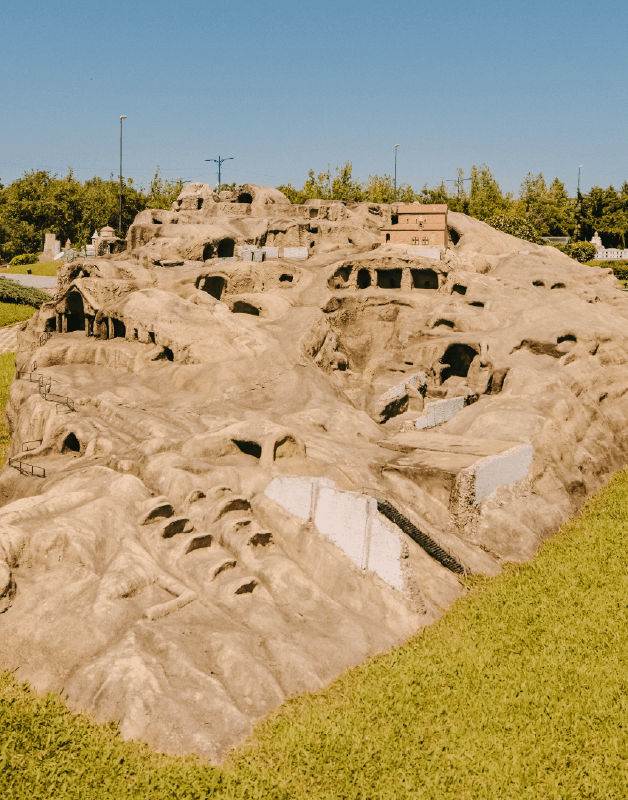
Uplistsikhe is a rock-hewn city located east of Gori, on the left bank of the Mtkvari River. It is one of the oldest settlements and urban centers in the Caucasus. Positioned along a trade route, Uplistsikhe served as both a religious and commercial hub for centuries. It has been granted the status of an immovable cultural monument of national significance.
This is an ancient settlement dating back to the 1st millennium BC, although the name "Uplistsikhe" first appears in written sources in the 7th century AD. In Uplistsikhe and its surroundings, a group of archaeological and architectural monuments are preserved, the oldest of which date to the Early Bronze Age and belong to the Kura-Araxes culture. Uplistsikhe was an urban-type settlement that grew into a major city center during the early Hellenistic period. Over time, Uplistsikhe gradually lost its significance.
Did you know that…
1. The rock-hewn complex of Uplistsikhe and the surrounding clustered settlements went through a long process of development. Initially, the rock-cut settlement became the dwelling place of the dominant community living in the Uplistsikhe region. Later, it evolved into the center of the "Zena Sopeli" (Inner Kartli) tribal union, where the leader (mamasaakhali), the “uplist” or lord, resided-hence the name Uplistsikhe, meaning "Lord’s Fortress."
2. Uplistsikhe ceased to function as a military strategic stronghold during the Mongol invasions in the 13th century. Afterwards, the local population of the surrounding area used it only temporarily for shelter and refuge.
3. According to one legend, Uplistsikhe was built by slaves. They were given a tool that was half-covered with iron, which they used to carve out the caves, and the other half was covered with gold. The slaves had to work in such a way as to polish the ordinary metal, after which they were rewarded with freedom and the precious metal, that is, gold.
