Shemokmedi Monastery
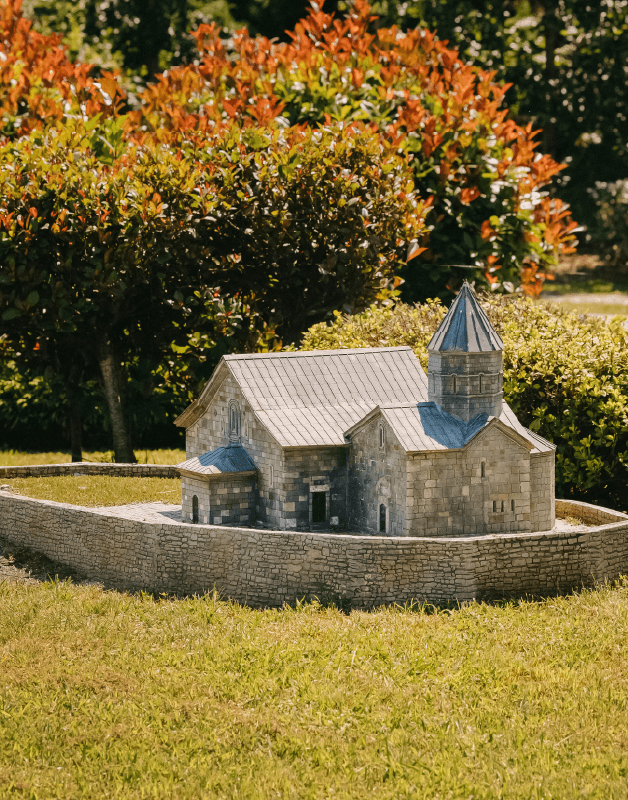
The Shemokmedi Monastery Complex is a medieval monastic ensemble located in the Guria region, in the village of Shemokmedi. The complex includes two churches, a bell tower, a defensive wall, and a cave. For centuries, it served as the hereditary burial site of the rulers of Guria - the Gurieli family. It is recognised as an immovable cultural monument of national significance.
The church on the right, known as the Church of the Savior, dates back to the 12th century. The church on the left, often referred to as “Zarzma,” was built in the 16th century by Vakhtang I Gurieli in 1572, specifically to enshrine the Transfiguration icon, which had been transferred from the Zarzma Monastery in the same century. This icon is one of the oldest surviving Georgian icons and is dated to the year 886. The bell tower also dates to the 16th century. As for the cave, it was once inhabited by hermit monks.
Did you know that…
1. Vakhtang II Gurieli donated 80 peasant households to the “Zarzma” church.
2. At the end of the 17th century, Bishop Jakob Dumbadze was active in Shemokmedi. In 1687, he travelled to Europe and met with Pope Innocent XI.
3. In the 19th century, the monastery was looted several times. In 1861, it was plundered by Muslim Adjarians, who took away valuable items. However, the looters were later captured, and part of the stolen treasures was returned to the monastery.
4. In 1919, Shemokmedi Monastery was looted once again. Treasures valued at 30 million maneti (old Georgian currency) were first taken to Batumi and then transported to the Ottoman Empire.
