Nekresi Monastery
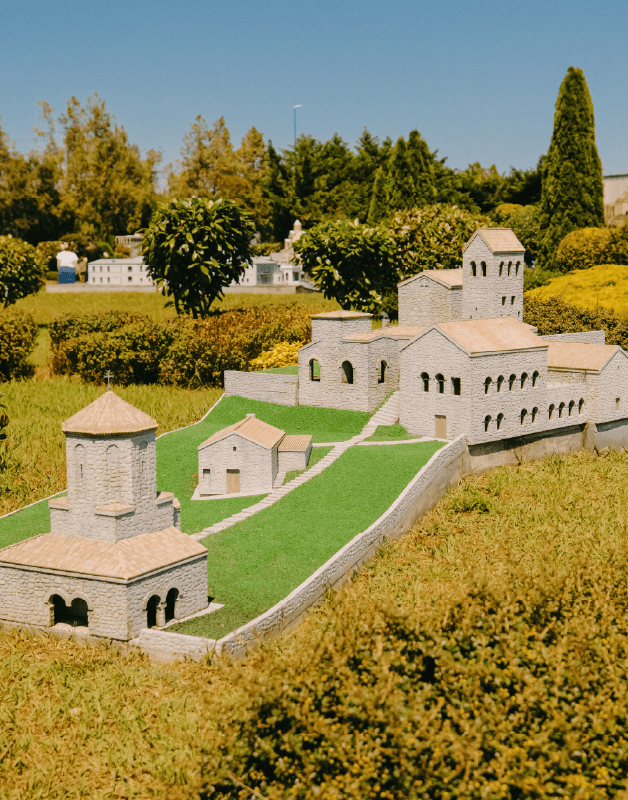
The monastic complex is located in Kakheti, above the ruins of the ancient town of Nekresi, on a forested hillside. The complex includes structures from various periods, dating back to the 4th century. Among them are: the oldest small church, the three-church basilica of the Nativity of the Virgin, the Church of the Archangels, the Church of St. George, the bishop’s residence, a wine cellar (marani), a tower, a refectory, small chapels, monks’ cells, and the remains of residential and utility buildings.
In the 4th century, King Trdat of Iberia built a church at this site, and in the 6th century, one of the Thirteen Assyrian Fathers - Abibos, settled here. During his time, the Nekresi bishopric was established, which played a significant role in the region. From this location, the political and cultural influence of Kartli extended into the mountainous areas of the Eastern Caucasus. Nekresi became a vibrant center of cultural and educational activity, and its bishops were active contributors to Georgian literary life.
Did you know that…
1. The Nekresi Monastery, which for centuries served as one of the most important centers of Georgian culture, was repeatedly raided by Lezgin tribes.
2. In the 1920s, the monument underwent scientific study, and later, in the 1940s–1950s, conservation and reinforcement works were carried out on the complex.
3. Abibos was one of the Thirteen Assyrian Fathers who arrived in Georgia in the mid-6th century to help spread Christianity. He came from Syria together with John of Zedazeni and initially practiced ascetic life alongside him at Zedazeni, before taking charge of the Diocese of Nekresi. His episcopate coincided with a particularly difficult period for Georgia. The Persians, who had established dominance in Kartli, were actively trying to impose Zoroastrianism, against which Abibos fiercely campaigned.
