Kvetera Church
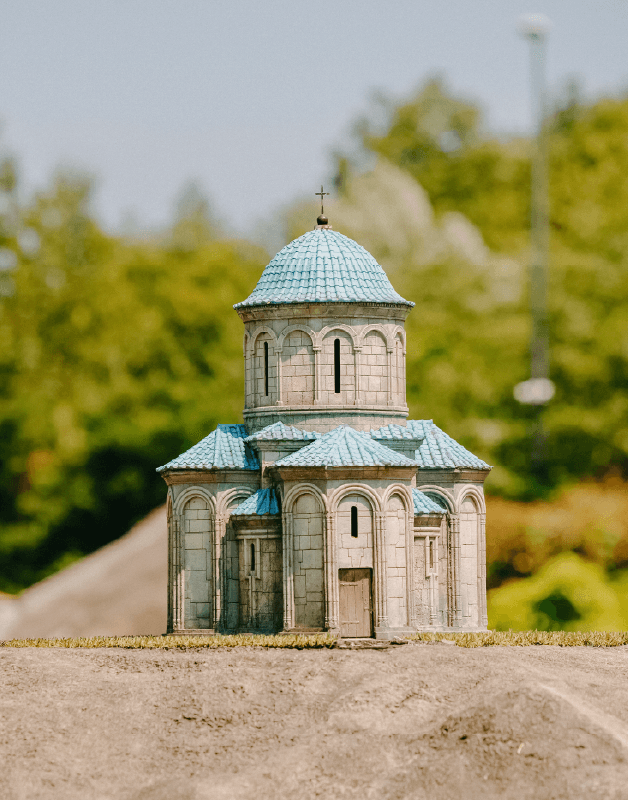
An ancient historic fortress-city located in Kakheti, which includes an inner fortress, a lower fortress, a defensive wall, a palace, a hall-type church, and its main attraction - a domed church. Kvetera is first mentioned in historical sources during the reign of King Kvirike III of Kakheti-Hereti (1010–1037), although according to the Georgian historian Prince Vakhushti, it likely existed as early as the 8th century.
1. King Kvirike III (reigned 1010–1037) divided the territory of Kakheti-Hereti into seven duchies, one of the most important of which was the Duchy of Kvetera. The strength and significance of Kvetera is further evidenced by the fact that King Bagrat IV (reigned 1027–1072), who subdued all of Kakheti-Hereti between 1040 and 1043, was unable to capture Kvetera. Traces of urban life at the site disappear after the 13th century, and the city is no longer mentioned in historical sources thereafter.
Did you know that...
1. In 1968, archaeological excavations were conducted in Kvetera, during which the remains of a mediaeval hall-type church were uncovered. The palace was excavated, the domed church was cleared, as well as the fortress’s reservoir, the main (western) gate, an octagonal tower, and the water supply route was identified. A large quantity of both glazed and unglazed pottery dating from the 9th to 13th centuries was discovered, along with glazed tiles, fragments of faience, glassware and bracelets, a copper coin and other artefacts.
2. Between 1968 and 1970, restoration and conservation work was carried out on the monument: the domed church was reconstructed and re-roofed with glazed tiles. The ruined sections of the palace were also restored.
3. From 1987 to 1991, further restoration and conservation efforts were undertaken, but the work remained incomplete. In 1991, the northern wall of the lower fortress's defensive enclosure was poorly repaired by local residents using substandard methods.
