Khertvisi Fortress
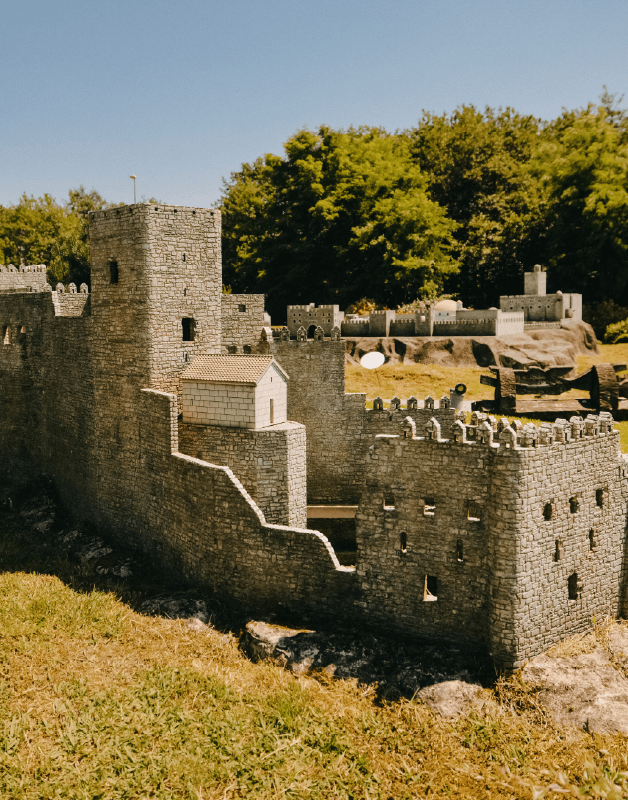
Khertvisi Fortress is a medieval fortress located in southern Georgia, in the village of Khertvisi in Javakheti, situated on a high rocky mountain. Due to its strategic location, the fortress has always played an important role.
In 1832, Swiss geographer and traveller Dubois de Montpereux discovered a lengthy inscription in Asomtavruli script above the entrance of the fortress. According to the inscription, a local feudal lord, nobleman Zakaria, began construction (or reconstruction) of the tower and defensive wall in 1354 and completed it in 1356. However, it is confirmed that the area had been inhabited centuries earlier. From the 19th century onwards, Khertvisi Fortress still held military and administrative significance, though its strategic value gradually declined.
Did you know that…
1. According to the chronicler Leonti Mroveli, whose account is likely based on oral tradition, Alexander the Great is said to have seen Khertvisi—along with other fortress cities of Georgia—during his campaign in the East in the 320s BCE. However, this version of Alexander the Great’s presence in Georgia is not supported by mainstream historical scholarship.
2. In the 1570s, Khertvisi Fortress fell into the hands of the Ottomans. It later served as the center of an Ottoman administrative unit. In 1771, King Erekle II briefly reclaimed the fortress, but only temporarily. During the Russo-Turkish War in 1828, Russian troops liberated the fortress from Ottoman control.
3. The church located in the western part of Khertvisi Fortress is built on the site of an older church, which is believed to have been constructed before the 10th century.
