Gori Fortress
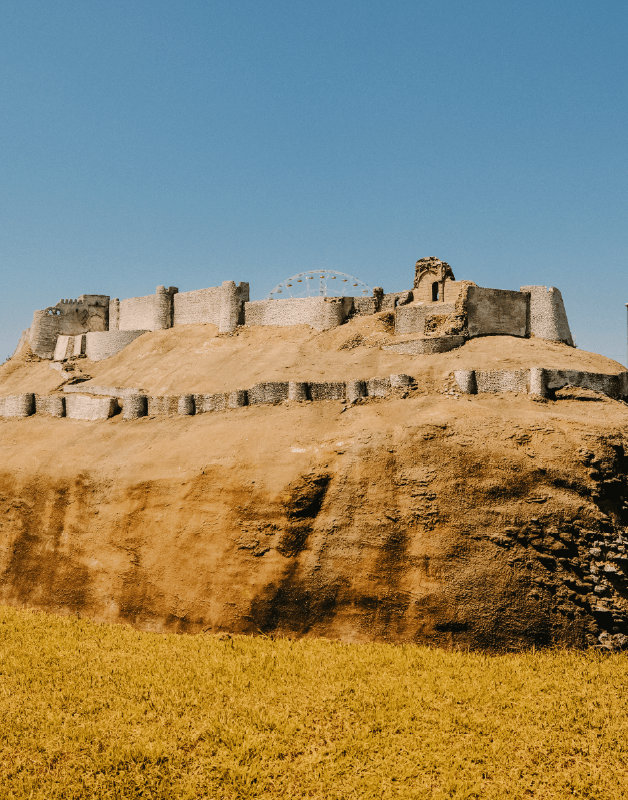
Gori Fortress is an ancient stronghold built on a rocky hilltop in the city of Gori. For centuries, it served as a vital military and political outpost, protecting the region of Shida Kartli. Control over the fortress often symbolized control over the entire region. On its eastern side stands a hall-type church dating from the 11th–12th centuries.
Archaeological findings and surviving ruins on the fortress’s northern slope suggest that a powerful citadel stood here as early as the late 1st millennium BCE, surrounded by a settled population. The name “Gori Fortress” is first mentioned in historical sources in the 13th century. Over the centuries, the fortress was repeatedly rebuilt and reinforced. Its major reconstruction took place in the 1630s under King Rostom of Kartli. The structure took its present form in 1774, when King Erekle II carried out extensive repairs — although soon after, the fortress began to lose its former strategic importance.
Did you know that...
1. The fortress was originally built with river stones, while earlier construction phases also used finely cut stone blocks.
2. It had a sophisticated water drainage system and an underground tunnel for drawing water.
3. Gori Fortress was severely damaged by the earthquake of 1920. Partial restoration began in the 1950s, with periodic repairs continuing in later decades.
4. The 11th–12th-century hall-type church located in the eastern part of the fortress still stands today.
5. Gori Fortress is officially recognised as a Monument of National Cultural Significance in Georgia.
