Gelati Complex
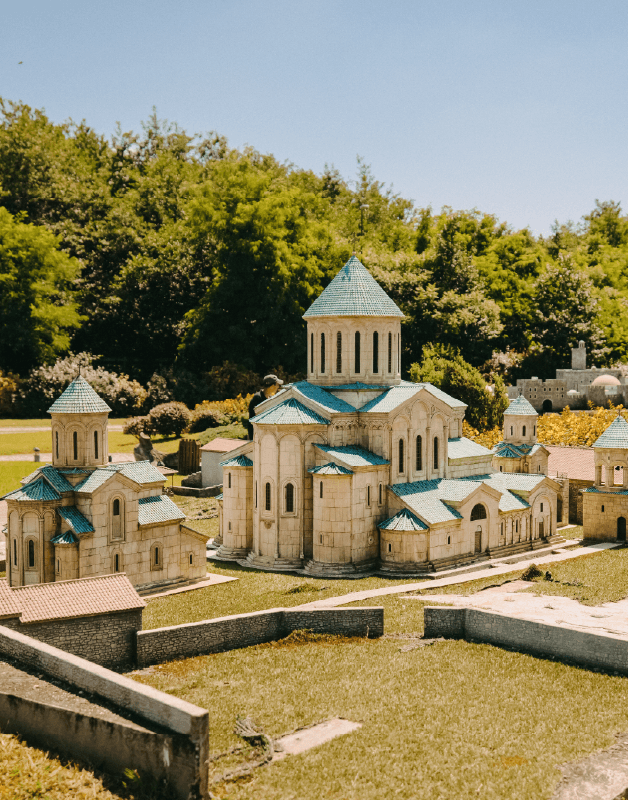
The Gelati Complex is a masterpiece of Georgian architecture and a UNESCO World Heritage Site. Founded in 1106 by King David IV of Georgia, known as David the Builder, it served as one of the most important cultural and spiritual centers of mediaeval Georgia. Located near the city of Kutaisi, the complex includes several buildings dating primarily from the 12th to 13th centuries. King David IV is buried at the monastery’s main entrance, following his wishes.
From the 12th to the 15th centuries, Gelati Monastery held full autonomy, answering only to the king himself - not even the Catholicos-Patriarch of Georgia had administrative power there, aside from blessing the clergy. The king had a personal envoy at the monastery, and the senior monks and spiritual leaders were considered part of the royal court. In the late 13th and 15th centuries, political and economic decline in Georgia affected Gelati’s prosperity. After the political fragmentation of Georgia in the late 15th century, the monastery came under the control of the kings of western Georgia.
Did you know that...
1. Gelati Monastery was one of the wealthiest feudal estates in mediaeval Georgia, owning vast lands. Agriculture, especially viticulture, was a key part of the economy, with wine, honey, and candle production bringing in significant income.
2. Under King David IV, Gelati became a vibrant intellectual center. Scholars such as Arsen Ikaltoeli, Ioane Petritsi, Arsen Bulmaisimisdze, Petre Gelateli, Eudemon Chkhetidze, Ekvtime Sakvarelidze, Gedeon Lortkipanidze, Anton I, Zakaria Gabashvili, and others worked here over the centuries.
3. On November 23, 1510, Gelati Monastery was burnt by invading Ottoman forces.
4. Kings of Imereti, including Bagrat III and George II, carried out extensive reconstruction and restoration work at Gelati, donating new estates and restoring the complex’s infrastructure and frescoes. Bagrat III was known as the “Second Builder of Gelati".
5. In the late 16th century, the residence of the Catholicos-Patriarch of Western Georgia was moved from Bichvinta to Gelati.
6. By the end of the 18th century, Gelati Monastery owned 42 villages.
7. The monastery was closed in 1923 during the Soviet era and now operates as a branch of the Kutaisi State Historical-Ethnographic Museum.
8. Gelati once held a vast collection of richly decorated Georgian manuscripts and religious objects, including the famous Khakhuli Icon of the Virgin, a masterpiece of medieval Georgian goldsmithing.
