Elia Monastery
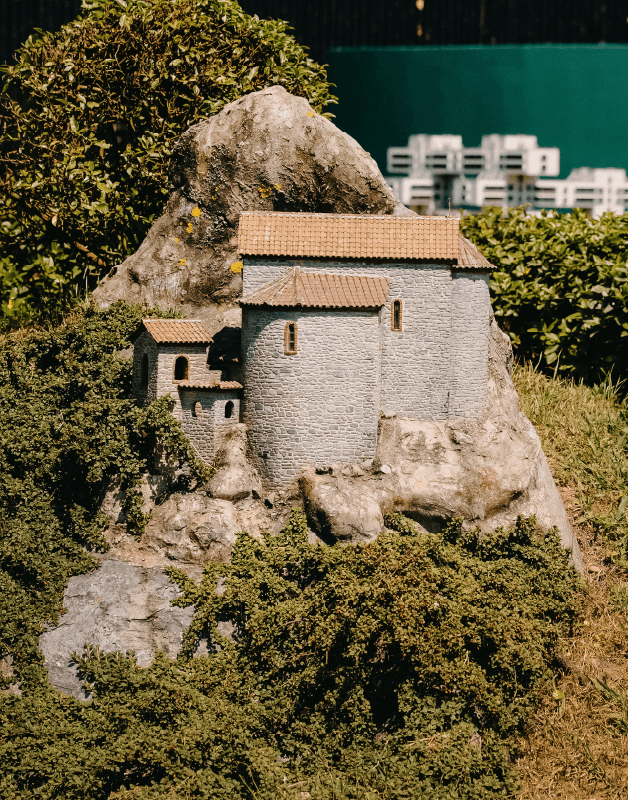
Elia Monastery is located in the Kakheti region, south of Dedoplistskaro, on the limestone mountain known as Ormpvzevriani. The church dedicated to Saint Elijah the Tishbite has existed here since the 6th century. Every year on August 2nd, the day commemorating the prophet Elijah, large crowds gather at the monastery to spend the night in prayer and worship.
The monument is mentioned by Alexander Dumas, who wrote about a spacious cave carved into the mountain that houses a bell tower where residents of the nearby village frequently visit. None of the original chapels have survived; it is believed that they were once fully enclosed within a natural cave, which was larger and more habitable at the time. What remains today mostly dates to the monastery’s second period of revival in the 16th century during the reign of King Alexander II of Kakheti, when the complex was practically rebuilt. Today, the chapel remains active with regular church services. It has survived many hardships over the centuries, including invasions that devastated Kakheti-Hereti and particularly the Kambekho region (modern-day Kiziki). The revival and preservation of the monastery owe much to the efforts of local architect Sergo Kartvelishvili, appointed by the Patriarchate.
Did you know that...
1. According to tradition, the prophet Elijah was fed by a raven in this cave. He left his cloak to his disciple, Elisha, before ascending to heaven from the mountain summit.
2. Elia Monastery has endured numerous devastations, including its destruction during the 1616 invasion of Kakheti. It was rebuilt for the third time in the 17th century under King Erekle II, after having been nearly completely ruined.
3. Although the monastery was only partially active in the 19th century, it suffered renewed damage during Soviet rule in the 20th century. Between 2004 and 2006, under the leadership of Father Nikoloz Lomsadze and Bishop Davit of Bodbe, the church was fully restored following archaeological excavations that clarified the monument’s chronology and history.
