Dmanisi Historic Site
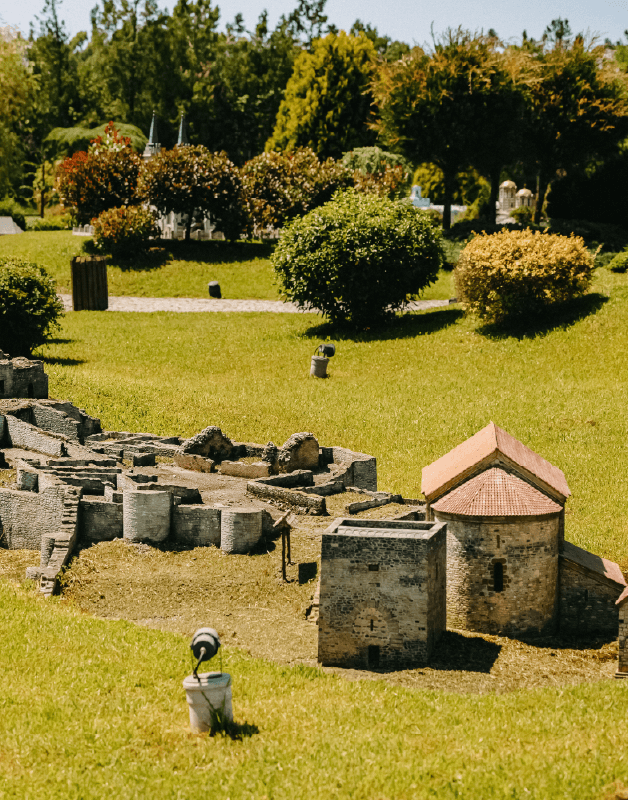
Dmanisi is a historic city site located in southern Georgia, in the Kvemo Kartli region, at the confluence of the Mashavera and Pinezauri rivers. The site consists of two main parts: the city itself and its surrounding suburbs. Dmanisi is world-renowned as the discovery site of the oldest known hominid remains in Europe – the famous "Zeusva and Mzia" – alongside a well-preserved mediaeval urban settlement.
The hominid fossils found in Dmanisi date back approximately 1.8 million years, making them the earliest evidence of human ancestors ever discovered in Europe. As for the city’s development, Dmanisi began to flourish as an urban center from the 10th century onward. At its peak, it was a multicultural city, home to Georgians, Armenians, and Muslims. In the 13th century, Dmanisi even had its own coin mint and served as a vibrant commercial hub. The city remained active until the 16th century.
Did you know that...
1. In the 1960s, archaeologist Otar Japaridze began excavating the medieval ruins of Dmanisi. Over time, the digs revealed not only remnants of the medieval city but also primitive stone tools and faunal remains from the Lower Paleolithic period.
2. In 1966, a fossilized elephant bone was discovered on the site.
3. In 1983, tools were unearthed that hinted at prehistoric human activity — a theory later confirmed by the discovery of early hominid remains.
4. "Zeusva and Mzia" belong to a unique species of Homo erectus, called Homo georgicus, which has close parallels only with anthropological findings in East Africa and Java. These discoveries placed the Caucasus at the center of global paleoanthropological research, as Dmanisi now ranks among the most important early human habitation sites in Eurasia.
5. Analysis suggests that the Dmanisi hominins were part of the first wave of human migration out of Africa, travelling through the Levantine Corridor into the Caucasus.
