David Gareji Lavra
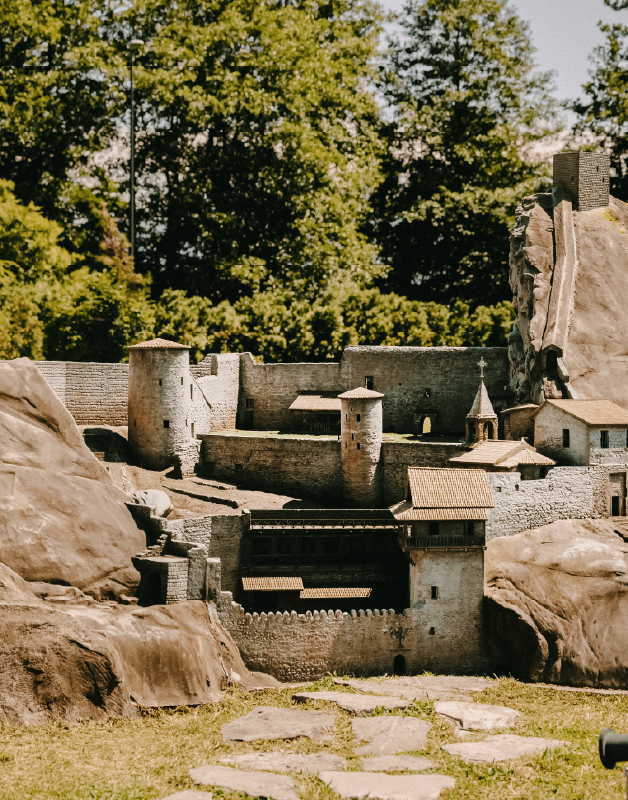
David Gareji’s Lavra is a remarkable monument of Georgian ecclesiastical architecture and the founding monastery of the David Gareja Monastic Complex. It was established in the first half of the 6th century by Saint David Garejeli, one of the Thirteen Assyrian Fathers. The architectural ensemble of David Gareji’s Lavra includes monastic and agricultural buildings carved into the rock, dating from different periods between the 6th and 18th centuries.
Saint David, along with his disciple Luciane, initially settled in a small natural cave in the remote mountains of the semi-desert region. Gradually, other monks gathered around him, and new caves, cells, and various rock-cut spaces were created. This marked the foundation of what became known as David’s Lavra, which laid the cornerstone for the entire David Gareja monastic network. The monastery remained active until the end of the 18th century. In the 19th century, it functioned solely as a pilgrimage site. Today, David’s Lavra is once again an active monastic institution.
Did you know that...
1. In the 6th century, with the help of Bubakar, the eristavi (duke) of Rustavi, the Church of the Transfiguration was carved into the rock. It later became the final resting place of Saints David and Luciane.
2. Between 837 and 848, the renowned Georgian cleric Ilarion the Georgian lived and worked at David’s Lavra.
3. In the 18th century, monastic and construction activity intensified again. A defensive wall was built around the Lavra to protect it from Lezgin raids. A bell tower with arched entrances was constructed as the main gateway to the monastery, and a watchtower was built on top of the cliff above the entrance for surveillance and defense.
