Bolnisi Sioni
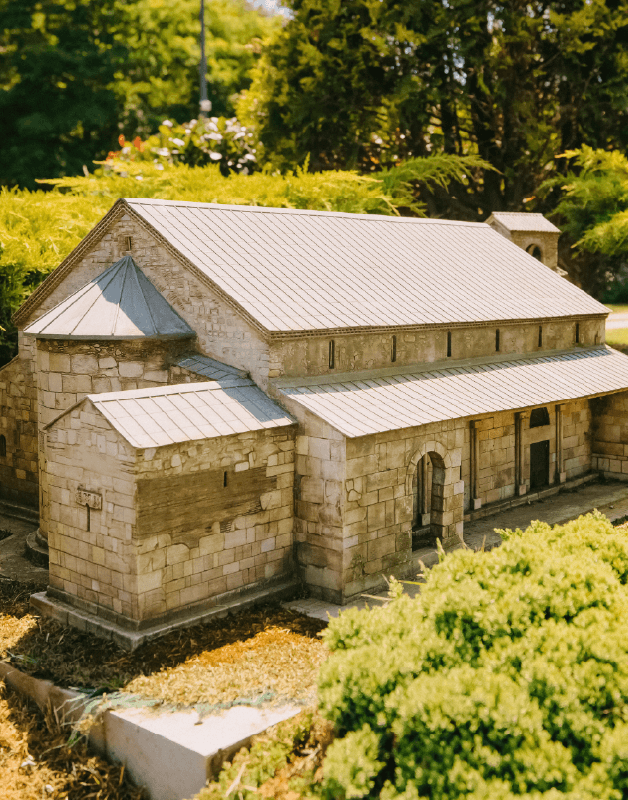
The Bolnisi Sioni is a 5th-century three-nave basilica located in the town of Bolnisi. It is one of the earliest surviving examples of Georgian Christian architecture. The church’s façades preserve some of the oldest known Georgian inscriptions. Bolnisi Sioni is also notable for featuring early examples of sculptural reliefs in Georgian architecture, such as a bull’s head and various birds and animals, which reflect pre-Christian symbolism later integrated into Christian art.
Bolnisi Sioni is one of the largest basilicas in Georgia. The exact construction date was determined by the building inscription carved into its façade. In the 8th century, a small chapel was added to the eastern side of the church. In 1634, the cathedral suffered severe damage during a Persian invasion, particularly affecting the vaults and western wall. Restoration began in the 17th century under the orders of King Rostom and Queen Mariam, during which the western entrance was also opened. Later in the century, Bishop Nikoloz of Bolnisi, following the command of King George XI, restored and repainted the church and erected a bell tower southwest of the cathedral. Major conservation and restoration works were carried out in 1970–1971.
Did you know that...
1. The small eastern chapel was added to the church in the 8th century.
2. The three inscriptions on the Bolnisi Sioni are among the oldest surviving examples of the Georgian script and language, second only to the inscriptions found in Georgia's Monastery of the Cross in Jerusalem.
3. The interior of Bolnisi Sioni is known for its austere monumentality architectural emphasis is placed more on the artistic structure of the interior space than on the external facades.
4. The basilica highlights both the connection between Georgian and broader Christian basilica traditions and the unique characteristics of Georgian ecclesiastical design.
5. On November 7, 2006, Bolnisi Sioni was officially designated as an Immovable Cultural Monument of National Significance by the President of Georgia.
