After YE Hip-Hop Will Never Sound the Same
“I’m not here to be accepted” - Ye, Kanye West said these words in 2013. Paradoxically, the words apply just as much to his past as they do to everything he created afterward. For some artists a phrase can summarize an entire career. For Ye, these words became the definition of his entire biography.
Kanye’s life feels like one long storm, where constant collision happens between his personal identity and his artistic self. At times, his ambition elevated his art, at others, his difficult personality became the heaviest burden his creativity had to carry.
Yet one fact remains unchanged: he is one of the most influential musical figures of the 21st century. It is precisely this eternal contrast, that’s present in every step of his journey and it continues to make his story so fascinating and relevant to this day.
Kanye West grew up in Chicago, although his mother was an English professor, the most important lessons of his life were never learned in a classroom. From an early age, his mind and spirit gravitated toward art and he constantly searched for spaces where he could express himself freely. His mother, Donda West, nurtured his sense of creative freedom, while legendary local producer No I.D. introduced him to studio and taught him a lot. Mastering the studio language eventually led Kanye to Roc-A-Fella Records, founded by Jay-Z, where alongside producer Just Blaze he became one of the label’s defining beatmakers. The world fully realized his talent when he worked on Jay-Z’s legendary album The Blueprint, leaving a signature sound that immediately stood out.
Soon after, rumors began circulating that Kanye was preparing to release his own album - one where he would not only be the producer, but also a rapper. To understand how bold this was at the time, it’s important to remember the rules of hip-hop in the early 2000s: producers made beats, rappers delivered the message. These were separate worlds that rarely overlapped. Finding a successful producer-turned-rapper was about as rare as spotting a unicorn running through the streets of Chicago.
The situation became even more dramatic in 2002, when Kanye was involved in a car accident that left his jaw shattered - the very jaw he needed in order to deliver his message to the world. What did he do? He transformed that trauma into “Through the Wire,” recording the song while his jaw was still wired shut. The track became the lead single for his debut album, The College Dropout.
Even before the album’s release, Kanye had already shaped the sound of countless artists. Talib Kweli, Ludacris, Jay-Z, Alicia Keys - all released successful songs built on Kanye’s production. But a new era truly began with The College Dropout. The album earned ten Grammy nominations and won Best Rap Album, defeating works by Jay-Z, Beastie Boys, LL Cool J, and Nelly - and with it, a new Kanye was born.
“Now I could let these dream killers kill my self-esteem, Or use my arrogance as the steam to power my dreams.”
Perhaps the greatest proof of that was his next album released in 2008 - 808s & Heartbreak. The album didn’t just signal the end of the “College Trilogy” era - it predicted the direction modern music itself would take.
“I'm not a rapper. I’m an artist. 808s isn’t a rap album - it’s a pop-art album.”
Heavy Auto-Tune, synthetic melodies and the iconic TR-808 drum machine became Kanye’s new language of provocation. Looking today at artists like Drake, Travis Scott, and The Weeknd, it’s impossible not to recognize the lasting influence of that sonic blueprint.
At the same time, Kanye himself continued to attract controversy like a magnet. Few moments were more infamous than the 2009 MTV Video Music Awards incident, when he interrupted Taylor Swift on stage. The backlash was enormous - even the President of the United States publicly criticized him. Kanye responded the only way he knew how: by going back into the studio and creating My Beautiful Dark Twisted Fantasy.
Frequently listed among the greatest albums ever made, the record was created in Hawaii and featured contributions from artists such as Kid Cudi, Elton John, Rihanna, Bon Iver, Rick Ross, and RZA. On this album, Kanye explored the pressures of fame and success more deeply than ever before. By then, he was no longer simply a hip-hop artist - he had become one of pop culture’s defining figures. This was also the moment his talent as a songwriter fully emerged. It felt like the culmination of everything he had built up to that point. Kanye himself described the process not as “making music,” but as creating “sonic paintings.”
His artistic success naturally translated into awards - each new album seemed destined to bring another Grammy. Beyond music, Kanye also found himself deeply immersed in fashion and visual art, fearlessly expressing his ideas wherever he went. Paul McCartney, Daft Punk, Virgil Abloh, Alejandro Jodorowsky - at first glance, these names seem disconnected. In reality, they represented the creative universe Kanye wanted to inhabit and he never hesitated to declare his ambitions openly:
“I am Warhol. I am the most impactful artist of our generation. I am Shakespeare in the flesh. Walt Disney. Nike. Google… Who’s going to stand beside me and let me create? Or will you keep trying to marginalize me until my time runs out?”
The Life of Pablo
How could there even be a shortage of reasons?! Whether it was Yeezus - the revolutionary album that once again pushed hip-hop’s boundaries, or The Life of Pablo, or yet another controversial television interview where Kanye’s most polarising thoughts became global headlines. It would be unfair to pretend his artistic and personal decisions left no dark marks behind. Even his most loyal fans often struggled to defend him. At times, Kanye himself seemed unable to protect himself from his own impulses. Yet music always remained the place where he could rediscover himself.
After personal struggles, public controversies, multiple hospitalizations and battles with his inner demons, Kanye entered a new era around 2018–2019. The albums Ye and Jesus Is King were followed by Sunday Service - gospel-inspired gatherings where Kanye and his choir performed spiritual reinterpretations of both religious music and his own hits. Thousands gathered at places like Coachella, in canyons and in churches. Some came for a concert, others for prayer, but everyone shared the same space.
Still, peace never fully settled into his art - chaos returned with his next album. The tenth studio album - Donda, was named after his mother, Donda West - the woman who first inspired his creative freedom. The album symbolized Kanye coming full circle.
Its release dates constantly shifted. Public listening events were held inside Mercedes-Benz Stadium, where Kanye literally moved into the stadium’s locker room to finish mixing the album. Its spiritual successor, Donda 2, became an entirely different experiment: released exclusively through the Stem Player platform, outside the traditional streaming ecosystem. Billboard charts did not recognize Kanye’s platform, but YE did not care. Once again, he was playing by his own rules.
At the same time, he began work on the ¥$ project alongside Ty Dolla $ign. Collaborative albums were nothing new for Kanye - Watch the Throne with Jay-Z had already proven that. Yet every partnership involving him continued to generate fascination. The reason is simple: it’s difficult to contain Kanye’s artistic ego within the limits of collaboration. This very difficulty is what makes the results so compelling.
In recent years, Kanye’s controversial public persona has increasingly overshadowed his music. At times, it feels as though the scandals themselves dominate the conversation. Yet, he continues to remain at the top of the charts.
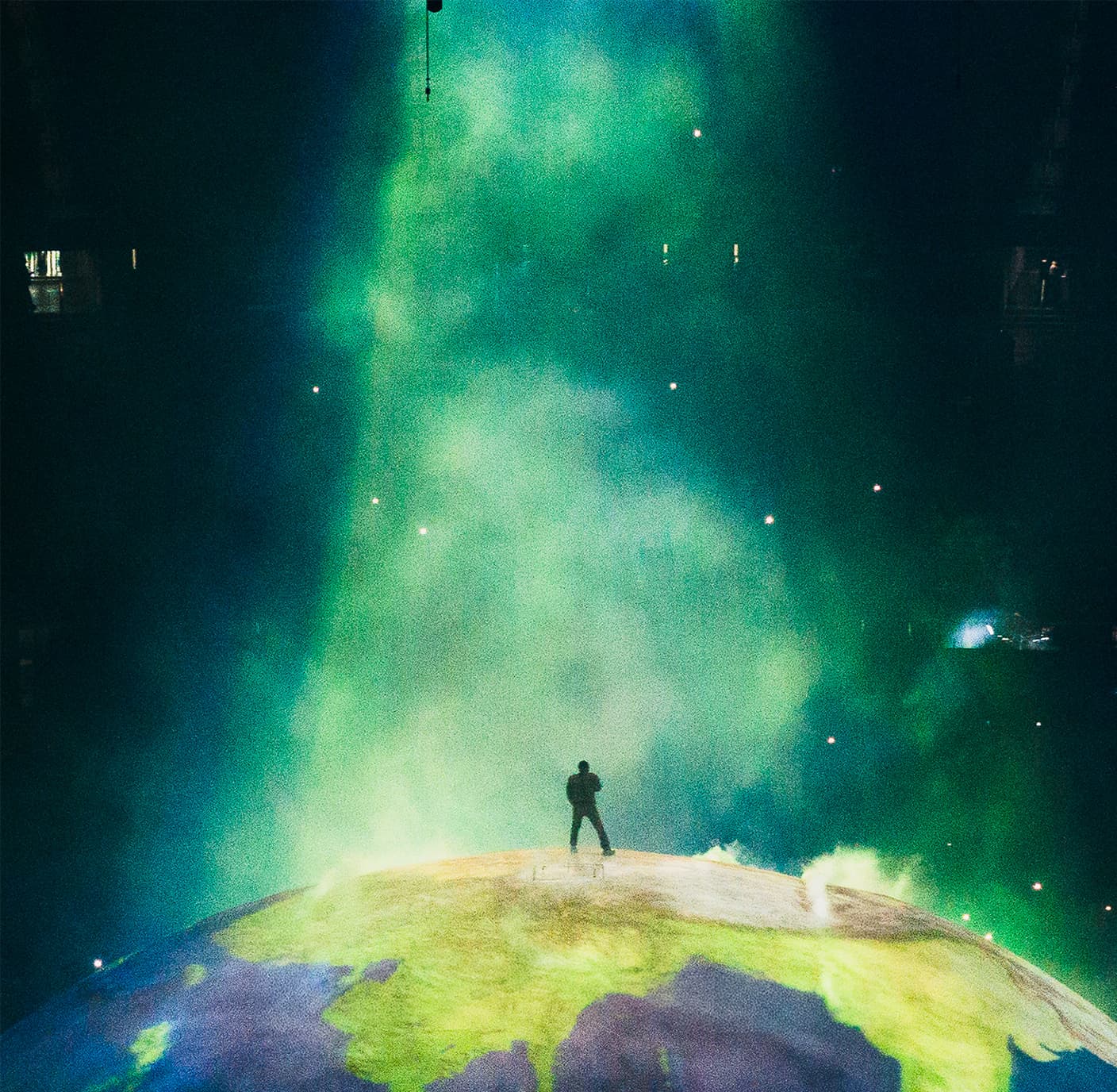
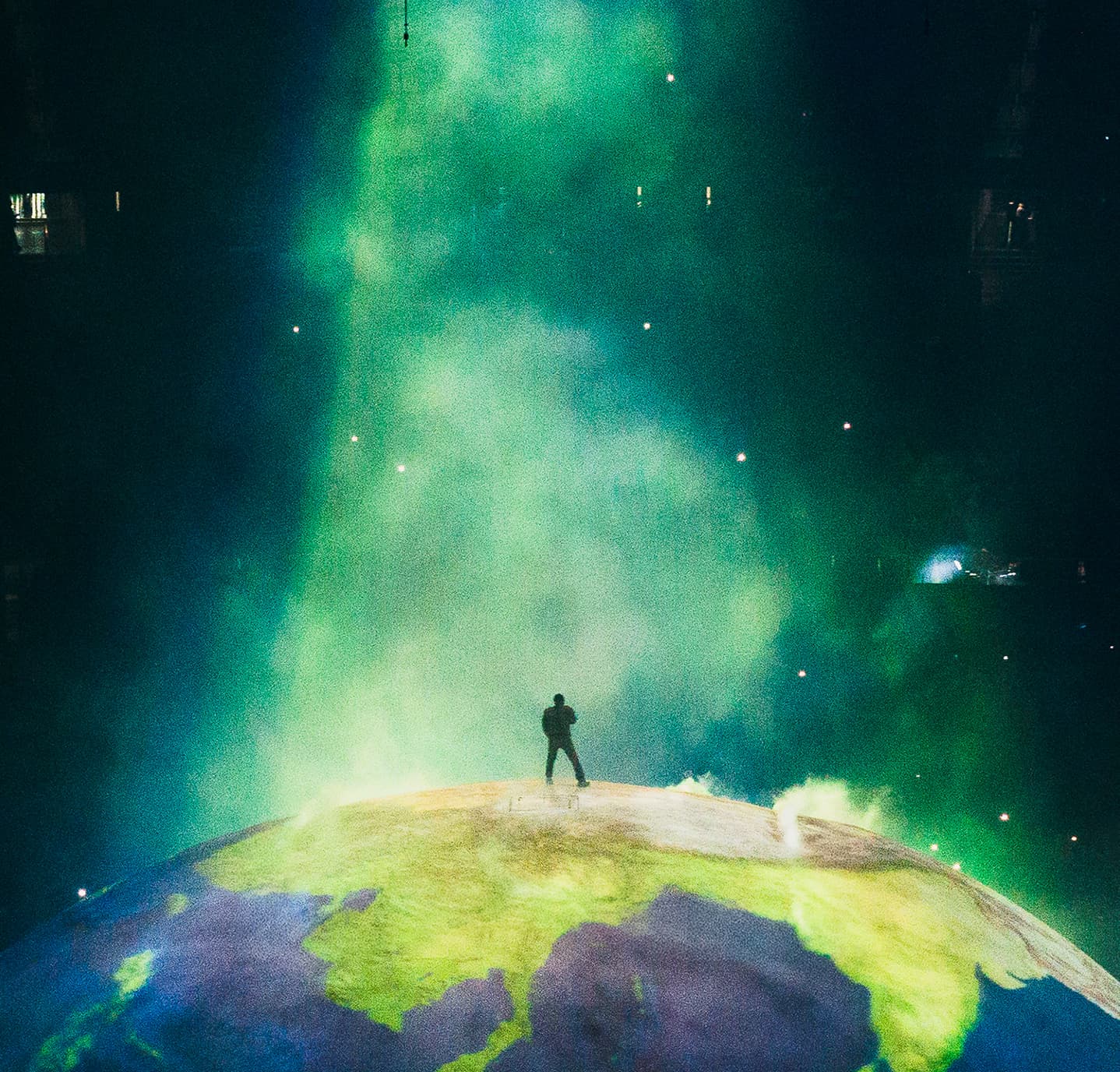
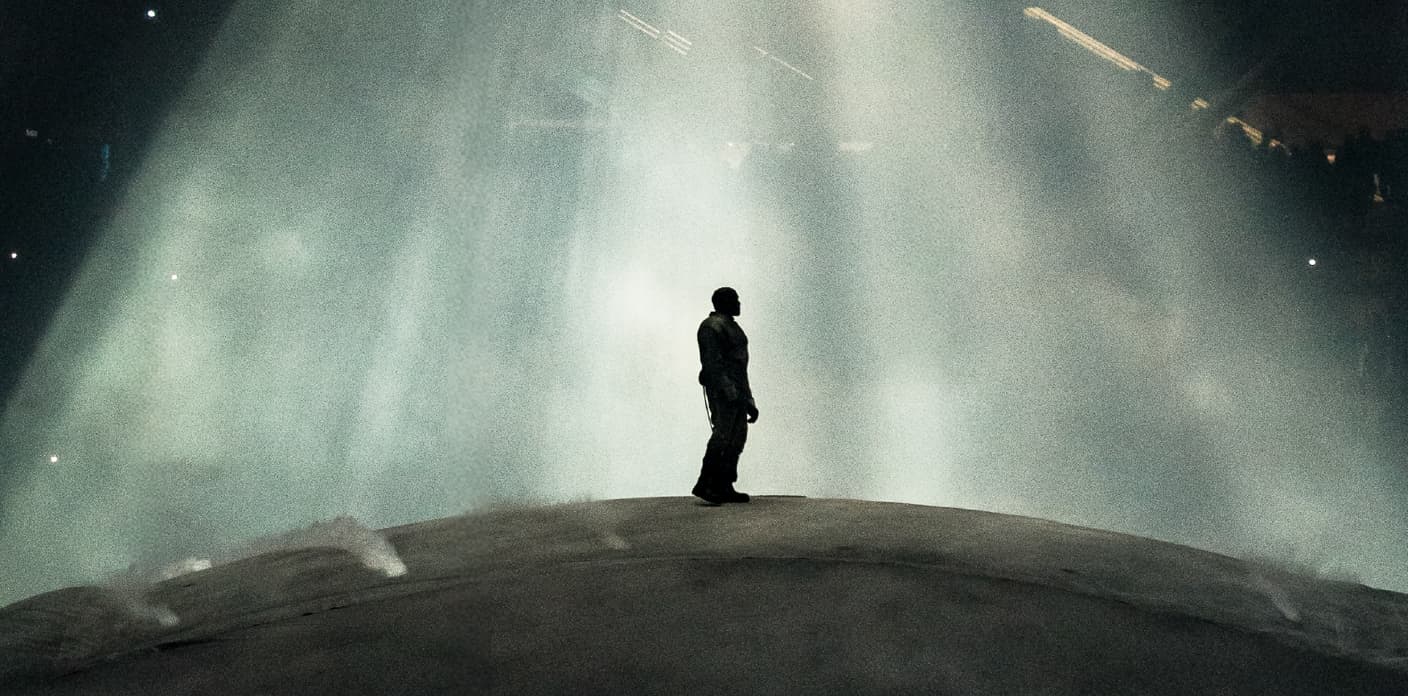
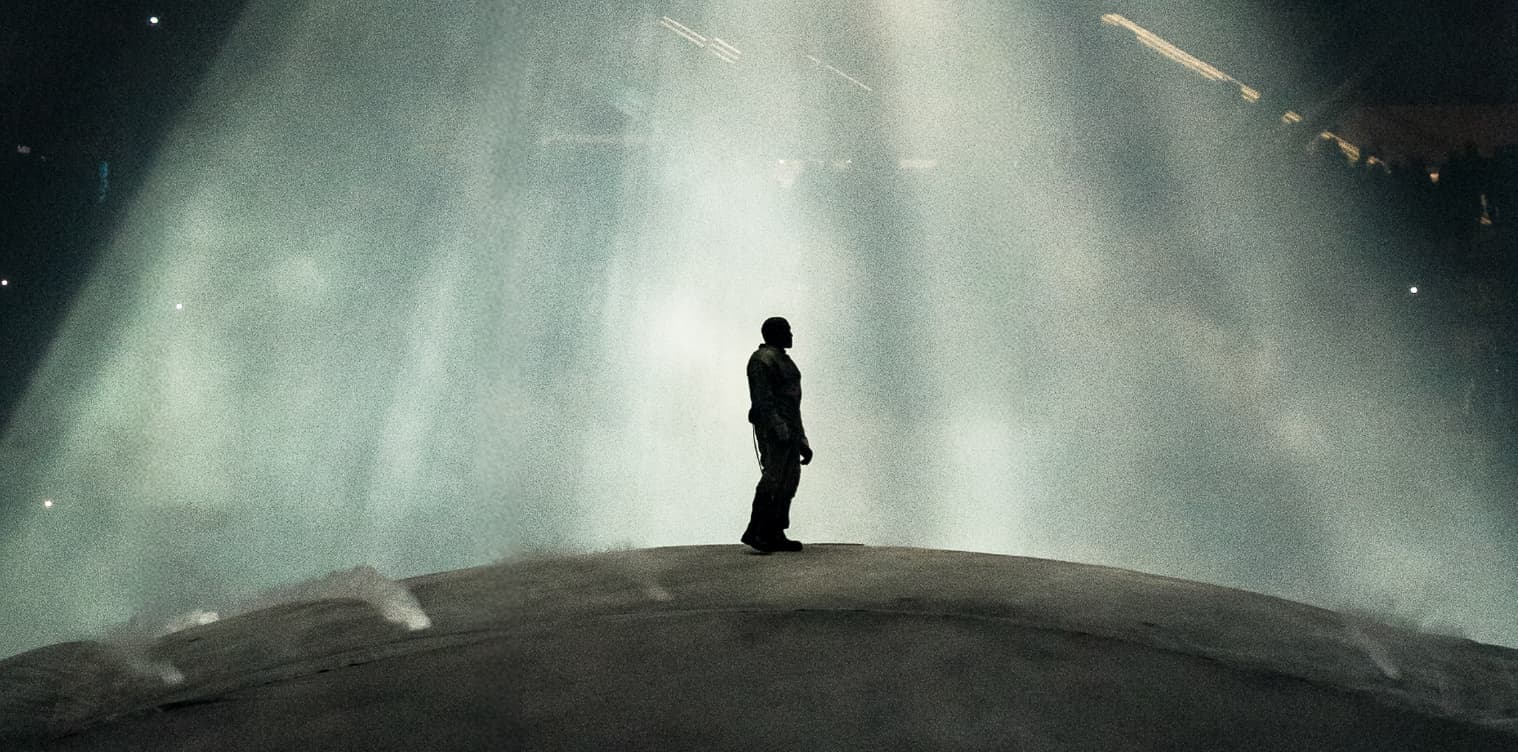
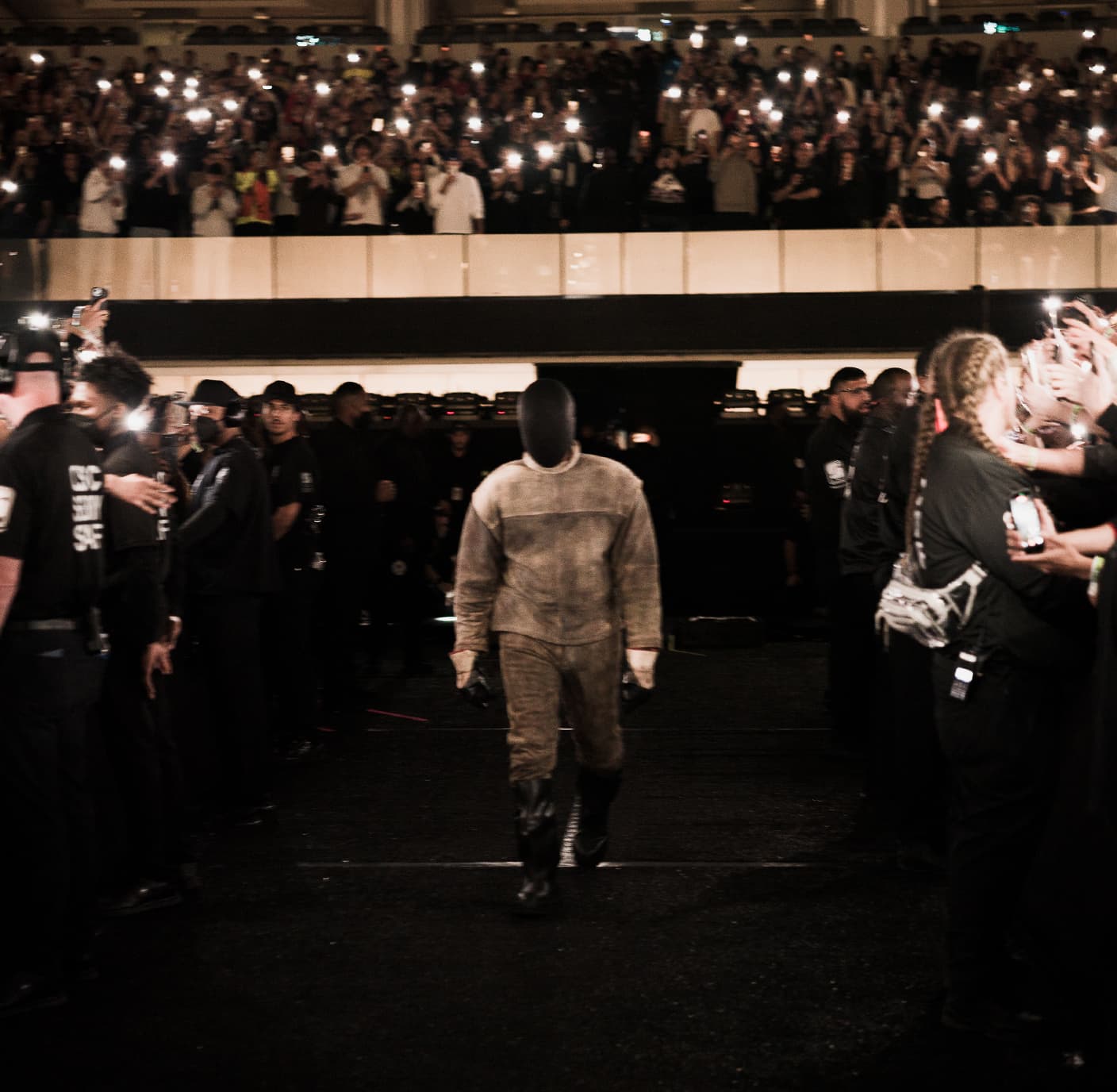
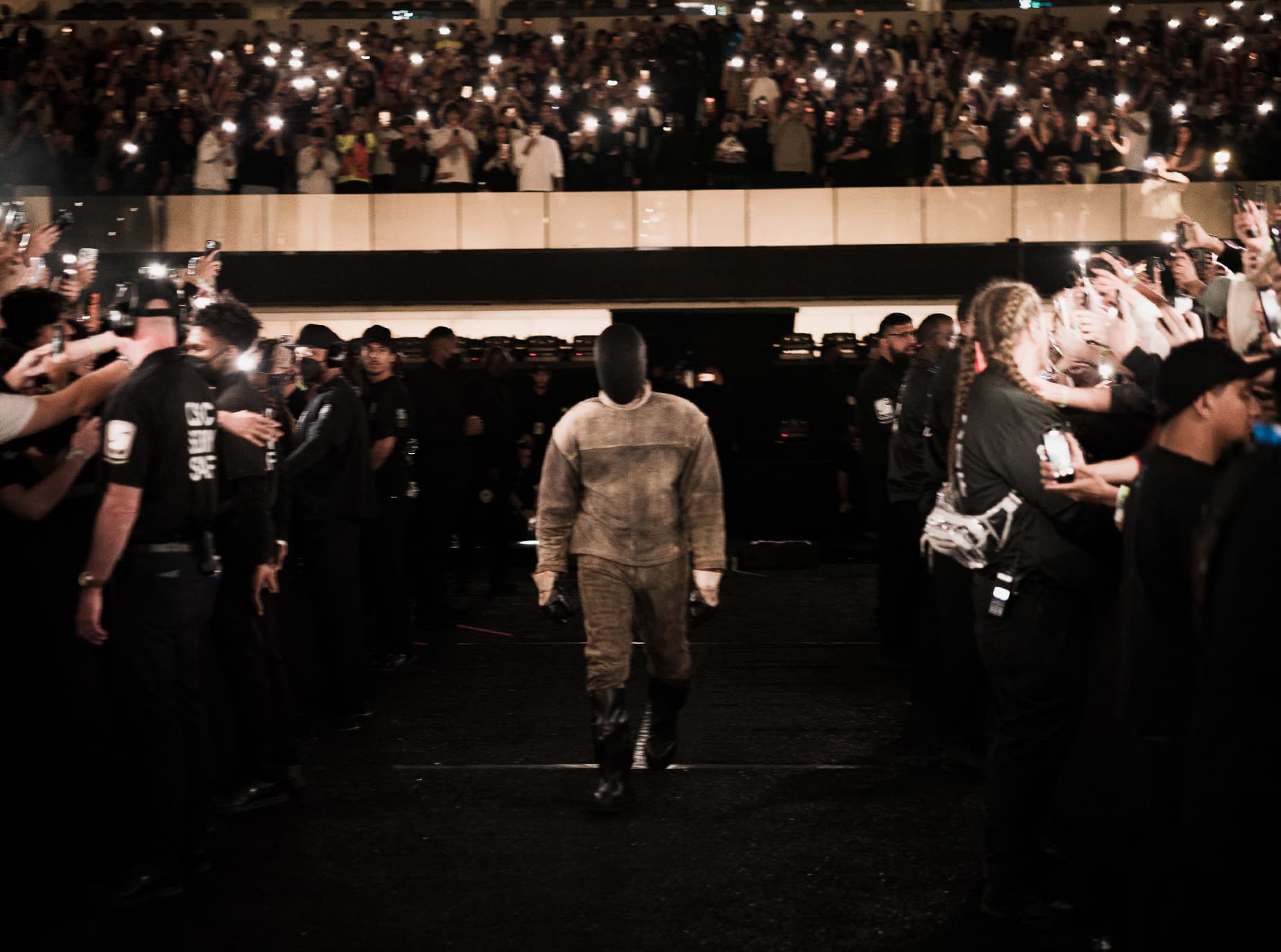
His latest project, Bully, also drew major attention, featuring collaborations with Travis Scott, CeeLo Green, Peso Pluma and Don Toliver. The live experience surrounding the album became a spectacle of its own: a massive hemispherical stage with Kanye standing at its center.
It almost felt like a visual representation of his entire career - an artist who spent decades expanding boundaries now standing inside a complete circle. The concert itself reflects that journey musically as well. Echoes of every era, every album, every version of Kanye coexist within a single experience. And now, unbelievably, Georgia will become part of that experience too.
A new page in this long and chaotic story will be written at Dinamo Arena.
His latest project, Bully, also drew major attention, featuring collaborations with Travis Scott, CeeLo Green, Peso Pluma and Don Toliver. The live experience surrounding the album became a spectacle of its own: a massive hemispherical stage with Kanye standing at its center. It almost felt like a visual representation of his entire career - an artist who spent decades expanding boundaries now standing inside a complete circle. The concert itself reflects that journey musically as well. Echoes of every era, every album, every version of Kanye coexist within a single experience. Almost unbelievably, Georgia will become part of that experience too. A new page in this long and chaotic story will be written in our country at Dinamo Arena.
“I’m not here to be accepted.” Those words were spoken in 2013. Since then, genres have changed, bridges have burned, old doors have closed and entirely new eras have begun. And every time the world called Kanye “crazy,” the music seemed to answer something different.
The story is not over. YE continues to create, continues to destroy, continues to collide with the world around him - and as long as he keeps doing that, one question remains open: What will we say about this chapter of history ten years from now?
ONLY PERFORMANCE IN GEORGIA